

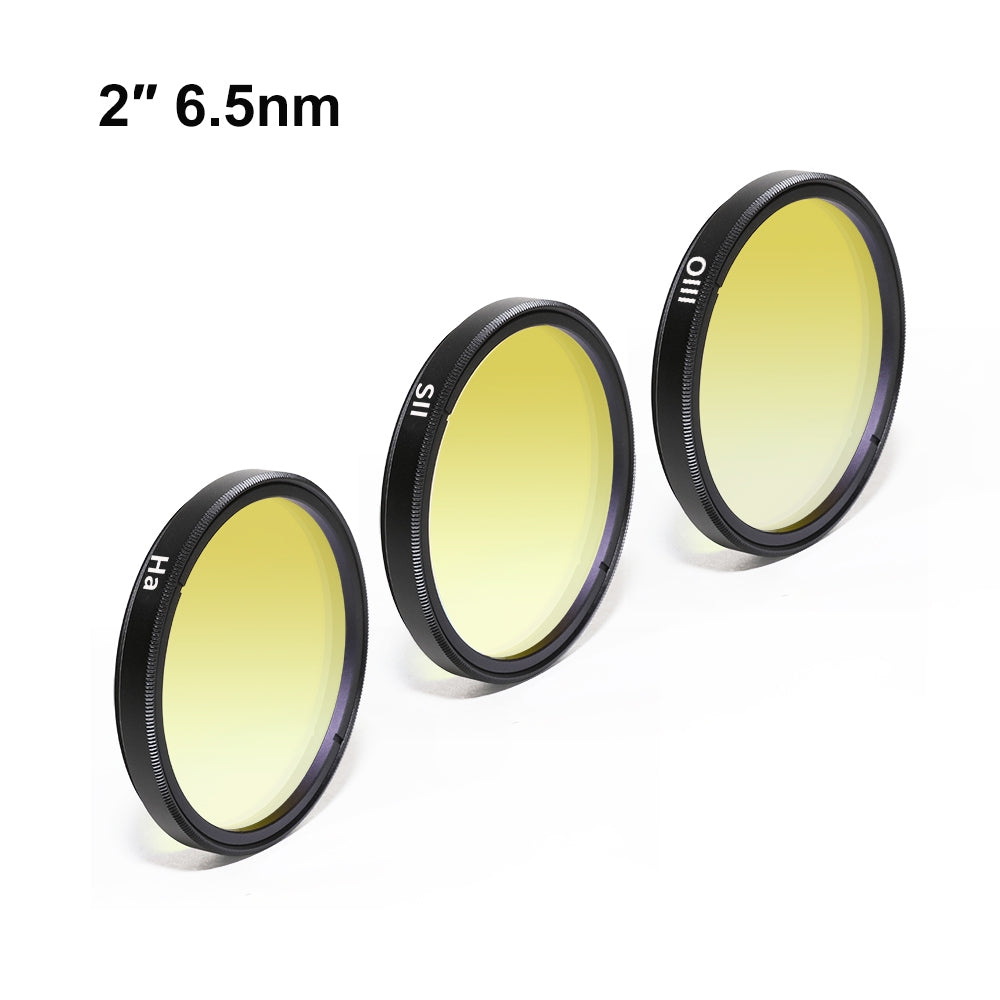
ToupTek Astro SHO narrowband filters are precisely tuned to the three main ionized emission lines found in star-forming regions:
- Hα (656.3nm)
- SII (671.6nm)
- OIII (500.7nm)

- H-alpha filter: Central wavelength 656.3nm
- SII filter: Central wavelength 671.6nm
- OIII filter: Central wavelength 500.7nm
- 36mm: H-alpha (3.5nm) / SII (4nm) / OIII (4nm)
- 1.25” & 2”: H-alpha (6.5nm) / SII (6.5nm) / OIII (6.5nm)


Choose your narrowband filters based on sensor size and the bandwidth available for your filter size. ToupTek Astro offers Hα, SII and OIII filters individually or as an SHO filter set.
| Sensor / Setup | Recommended Size | Available Narrowband Options |
|---|---|---|
| 1-inch or smaller sensor | 1.25" | Hα / SII / OIII, 6.5nm |
| APS-C or smaller sensor | 36mm | Hα 3.5nm / SII 4nm / OIII 4nm |
| Full-frame or smaller sensor | 2" | Hα / SII / OIII, 6.5nm or 4nm options |
4nm vs 6.5nm Narrowband Filters
Bandwidth (FWHM) describes the width of the spectral band transmitted by the filter. A narrower bandpass isolates a tighter wavelength range, while a wider bandpass transmits a broader range around the target emission line. Choose from the bandwidth options available for your filter size and imaging setup.


- The horizontal axis represents the wavelength of light (in nm), and the vertical axis represents light transmittance (percentage %).
- Red line: Hα (656nm); Green line: OIII (500.7nm); Blue line: SII (672.4nm).
- Emission nebula signal bands are mainly at 656nm (Hα), 500.7nm (OIII), and similar wavelengths.
- Light pollution peaks are often found near 540nm and 590nm (sodium/mercury lamp bands).
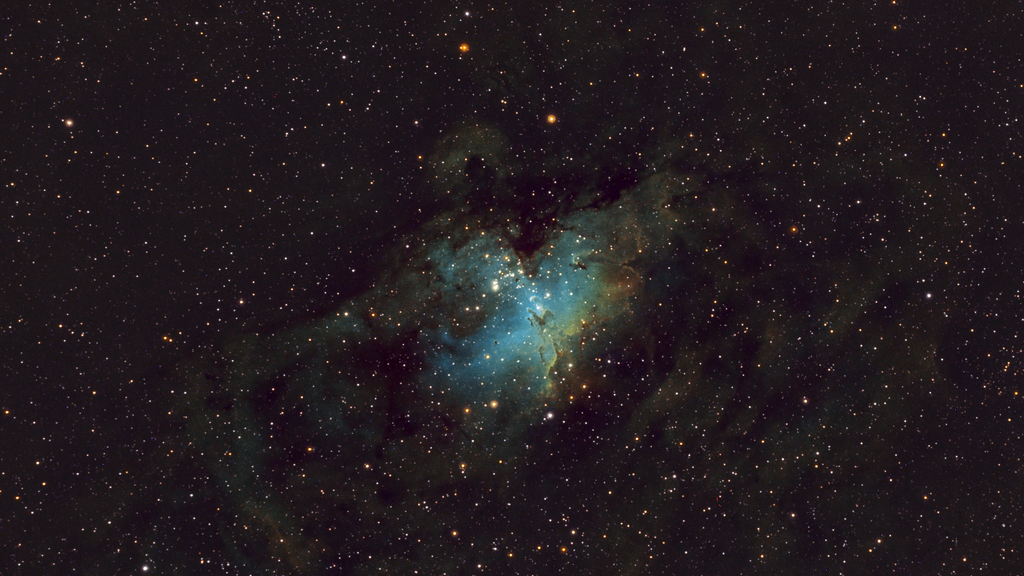
Photographer: voice
Telescope: Sky-Watcher
Mount: UMI
Camera: ToupTek Astro ATR2600M
Filters: ToupTek Astro 36mm LRGB&SHO
Integration: Hα: 30 × 600s ; SII: 30 × 600s ; OIII: 30 × 600s
Total exposure: 15h

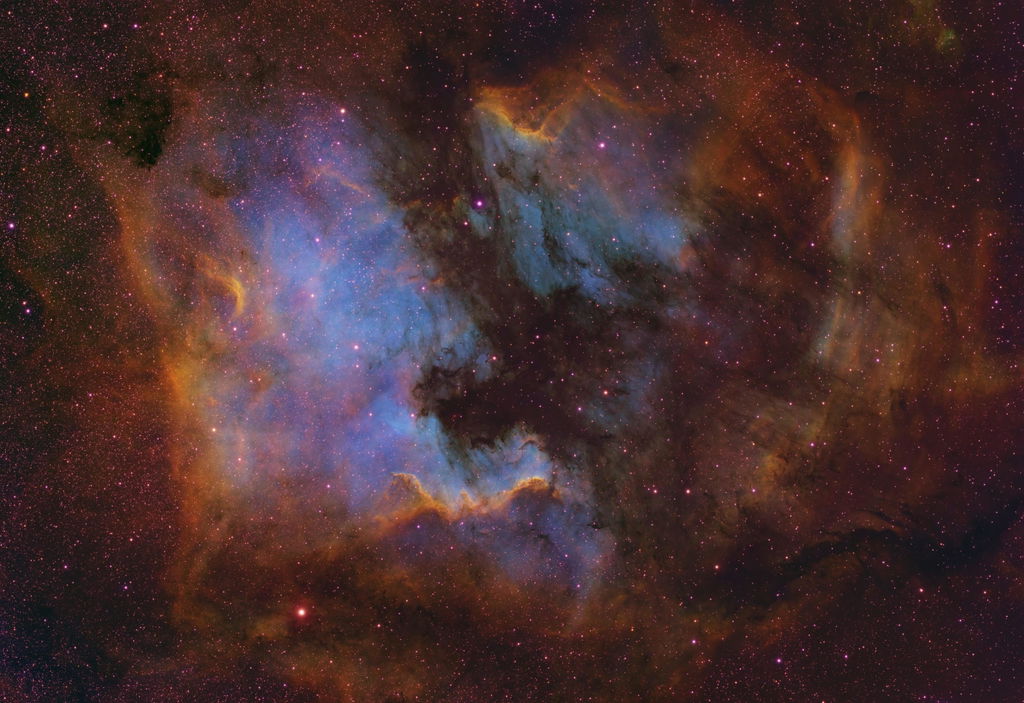
Photographer: voice
Telescope: Sky-Watcher F3.4
Camera: ToupTek Astro ATR2600M / ATR2600C
Mount: UMI
Filters: ToupTek Astro 36mm HSO
Processing: Narrowband combination using HSO channel mapping
Total exposure: 20h

Photographer: 原上行川
Telescope: Askar SQA55
Camera: ToupTek Astro ATR2600M
Mount: iOptron HAE16C
Filters: ToupTek Astro 36mm HSO
Astrophotography wireless controller: StellaVita
Integration: Hα: 71 ; OIII: 63 ; SII: 49
Total exposure: 15h

Photographer: Yahushua
Telescope: Askar 130HNT28-AL
Camera: ToupTek Astro ATR585M
Mount: iOptron CEM26
Guide camera: G3M2210M
Filters: ToupTek Astro 1.25” HSO
Total exposure: 7h


Photographer: voice
Telescope: Sky-Watcher
Camera: ASI2600M
Filters: ToupTek Astro 2” HSO
Mount: UMi 17
Integration: Hα: 36 × 600s ; SII: 36 × 600s ; OIII: 36 × 600s
Total exposure: 18h

What are narrowband filters used for in astrophotography?
Narrowband filters isolate specific emission lines such as Hα, [OIII] and [SII] while suppressing much of the unwanted background light. They are especially useful for imaging emission nebulae and building SHO narrowband images.
What is an SHO filter set?
An SHO set contains SII, Hα and OIII narrowband filters. Each filter records a different emission line, and the three channels can be combined during image processing for SHO color mapping.
Which narrowband filter size should I choose?
Use 1.25-inch filters for cameras with a 1-inch or smaller sensor, 36mm filters for APS-C and smaller sensors, and 2-inch filters for full-frame and smaller sensors.
- 36mm unframed filters: Special coating eliminates ghosting. To install, align the side with the inward-extending black ring toward the telescope for instant orientation and improved convenience.
- 1.25" & 2" filters: Special coating removes front/back orientation concerns—simply screw in for fast, tool-free installation.


- Quality Assurance Inspection: Each filter undergoes pre-delivery spectral testing and rigorous screening to guarantee consistent optical performance.
- After-sales Policy: Includes a two-year warranty covering manufacturing defects, plus professional technical support and usage guidance.
- For assistance, please contact our support team:
https://touptek-astro.com/supports
- Color Variation: Filter coating colors may appear different under varying lighting conditions and viewing angles—this is normal optical behavior.
- Product Improvements: We continually optimize our products, which may result in minor specification and appearance updates. Specifications are subject to change without notice. Please refer to the physical product for final details.