



GS Series PAPO Guide Scope
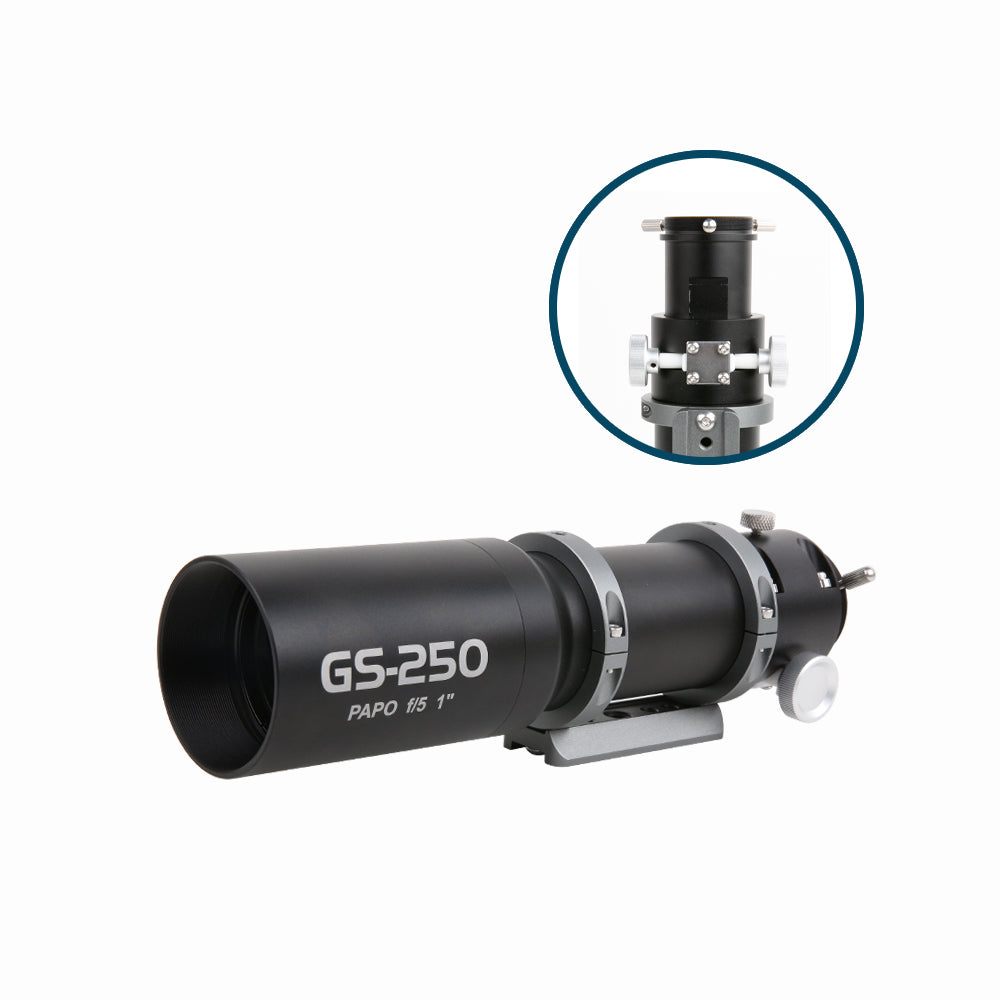
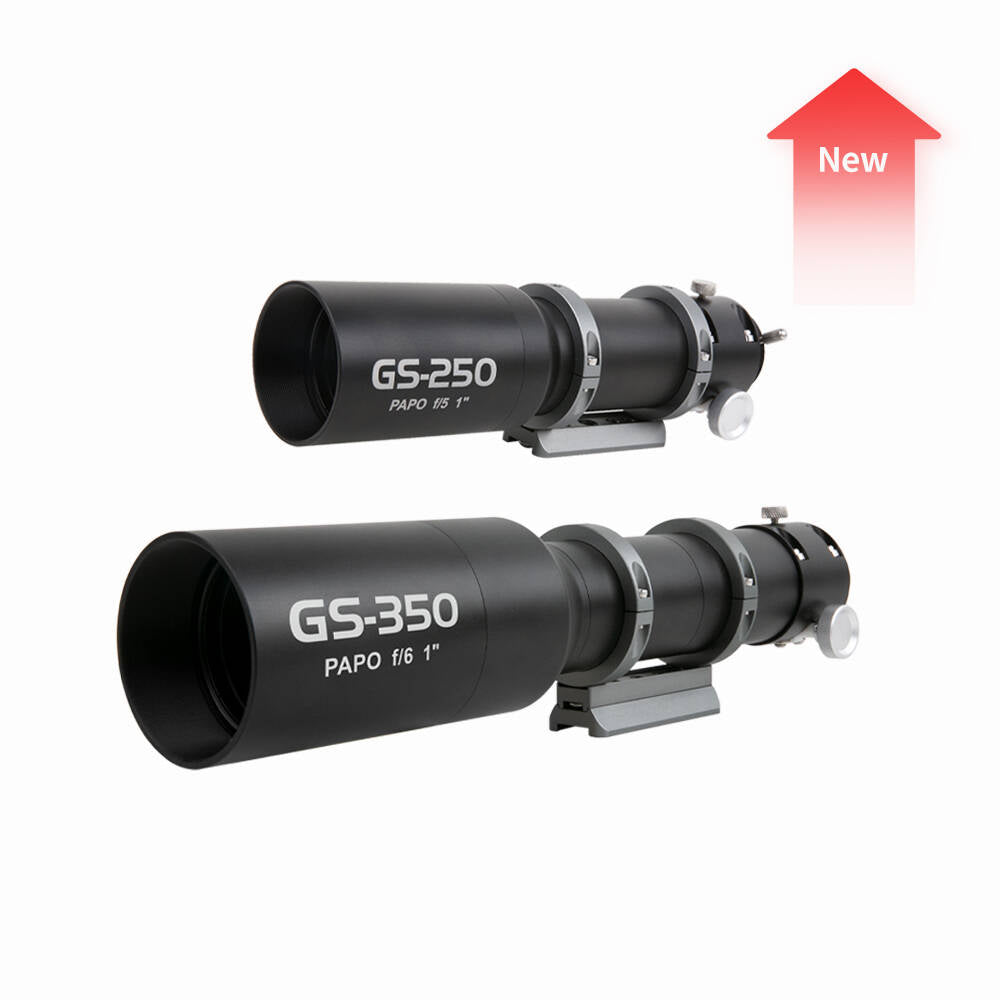
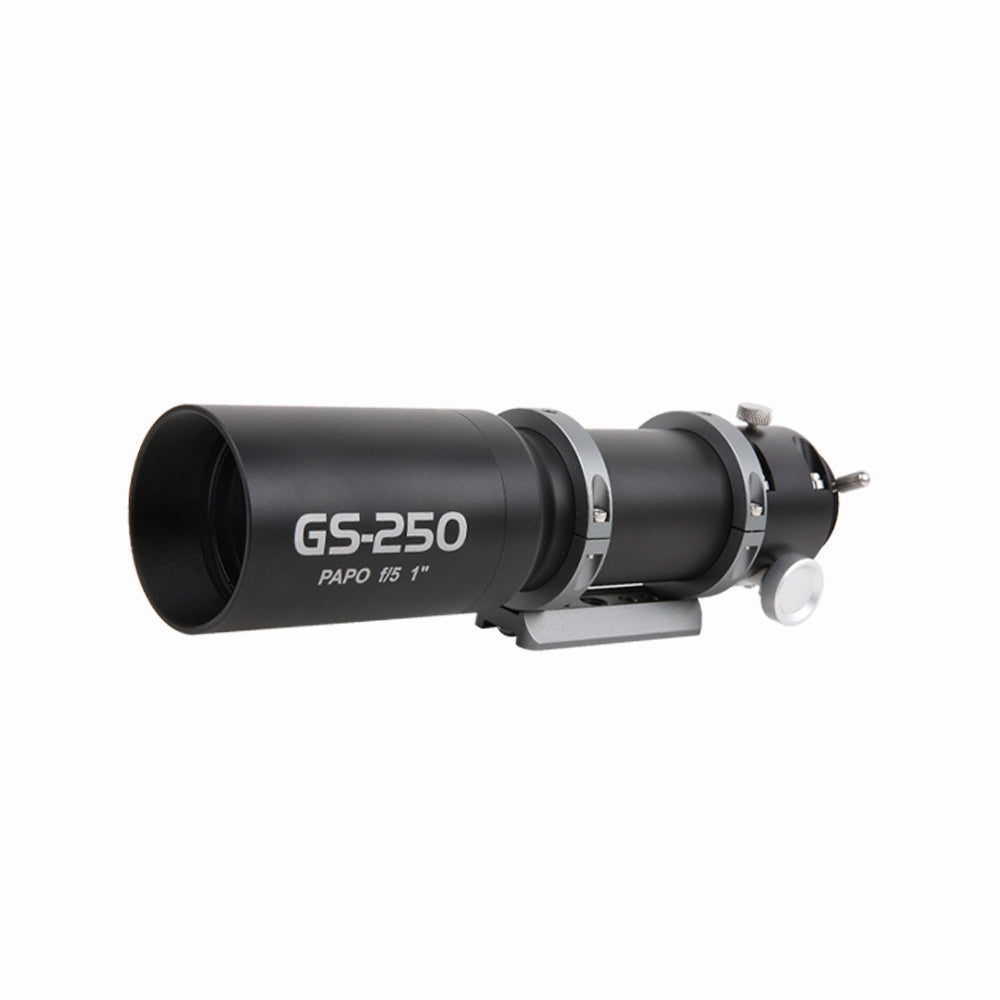
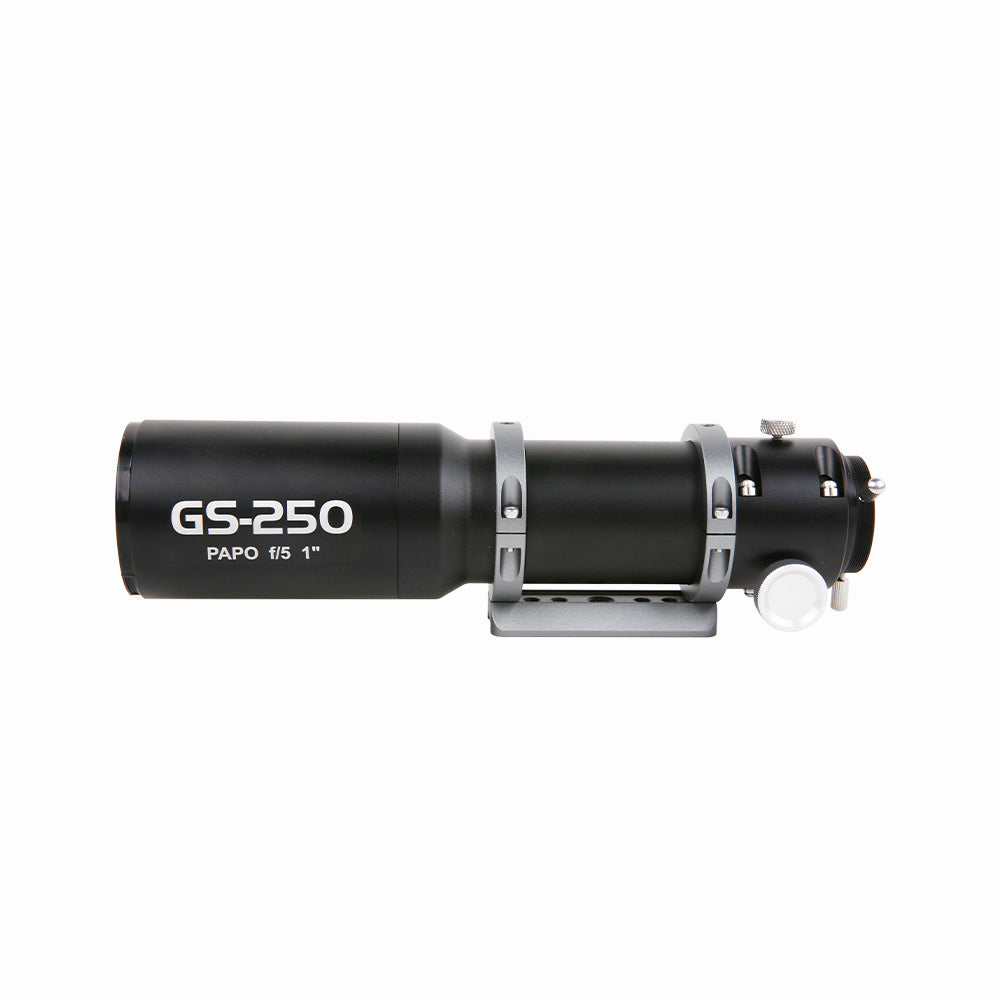
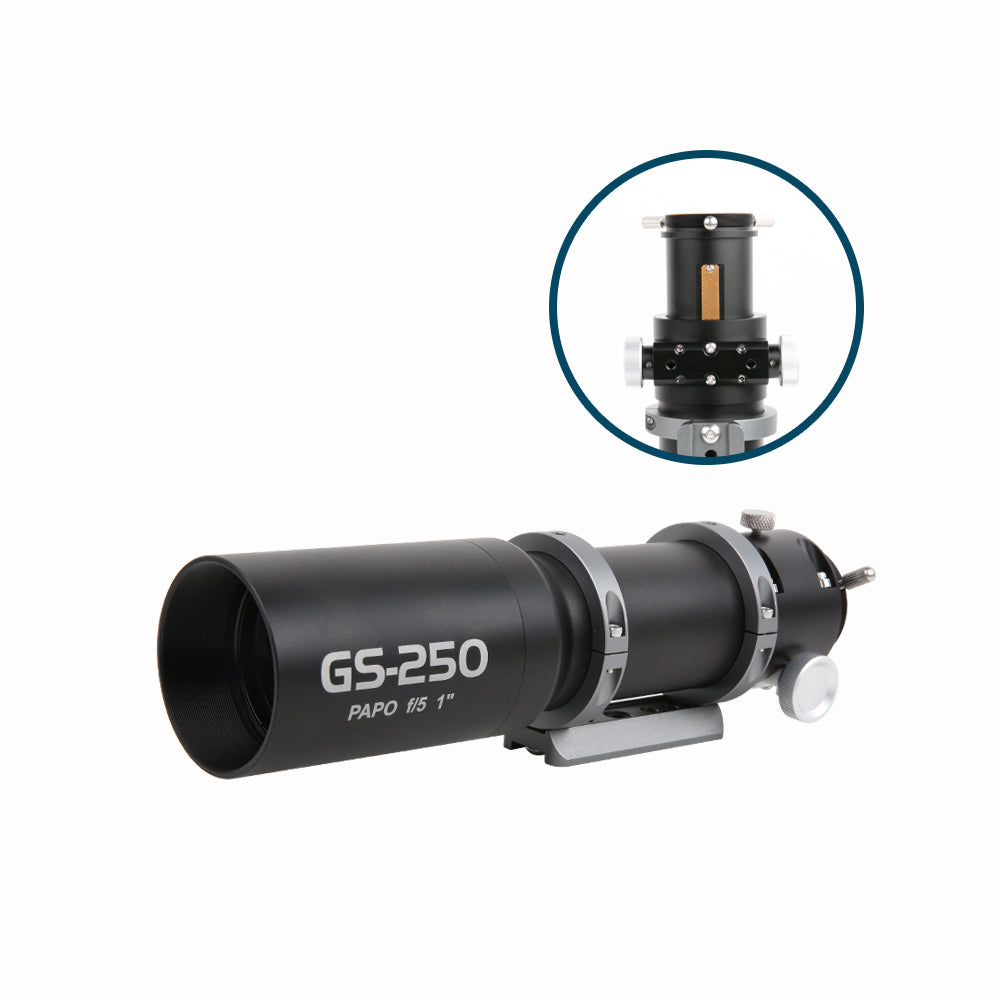
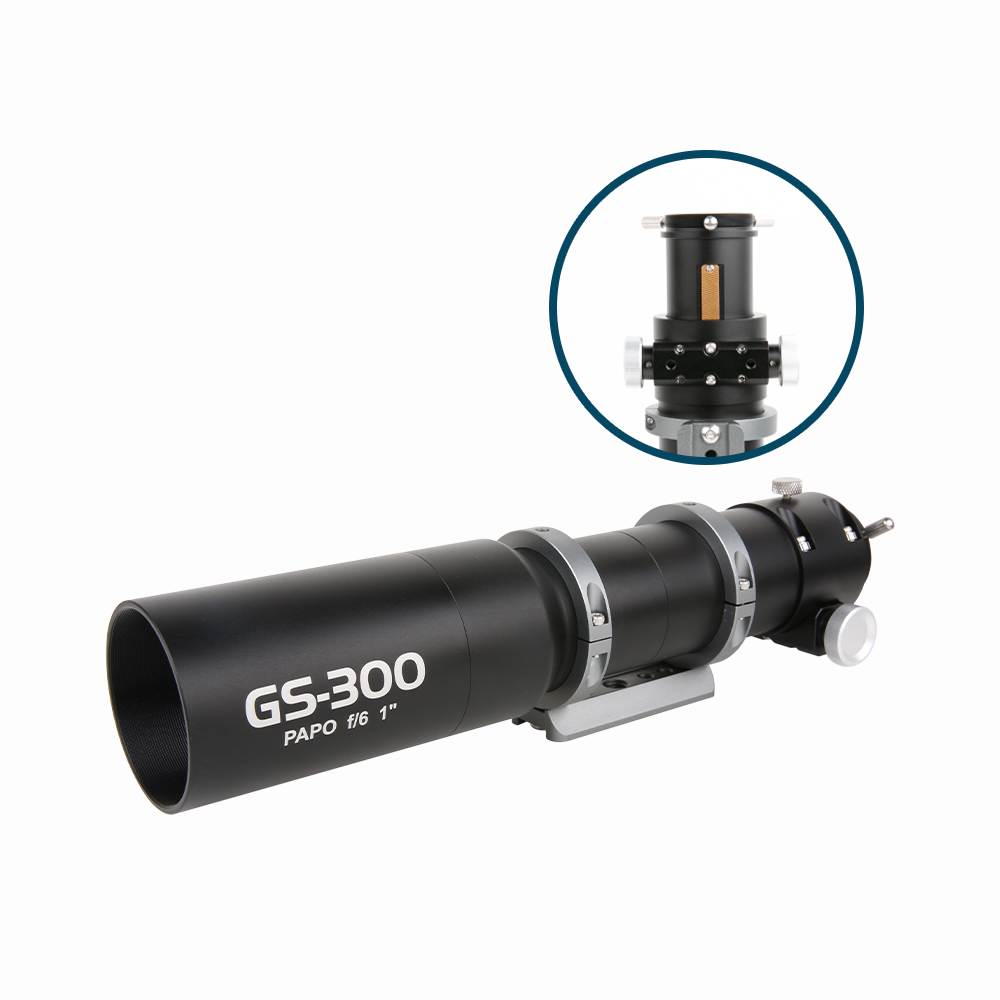
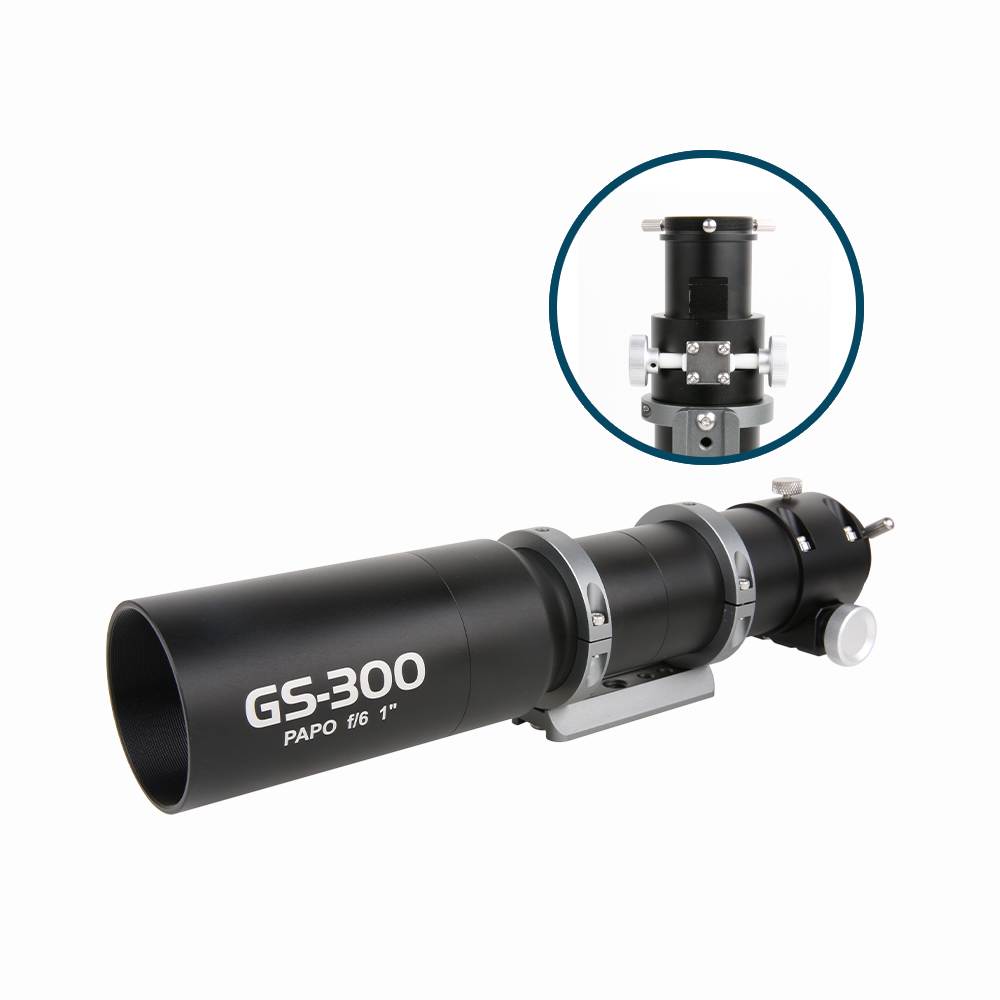
GS-250AR/AC
Focal length: 250mm | Aperture: 50mm | f/5
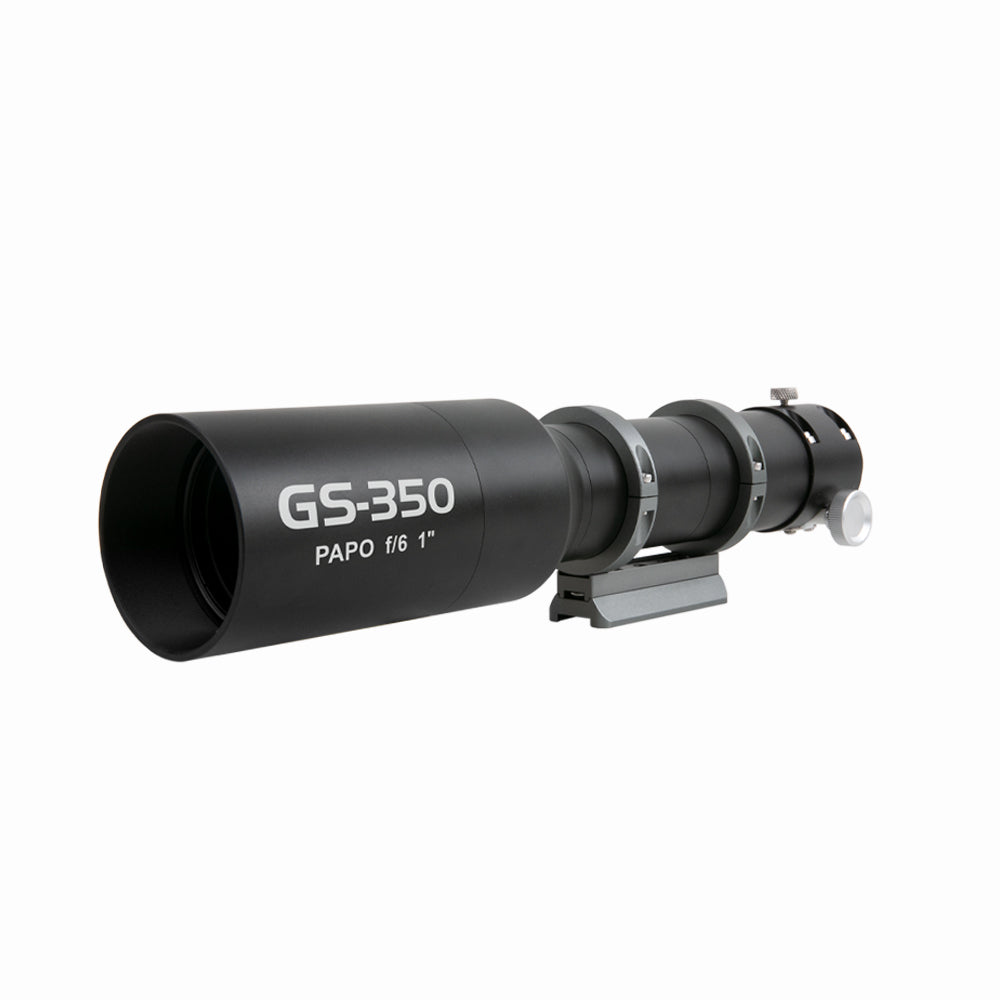
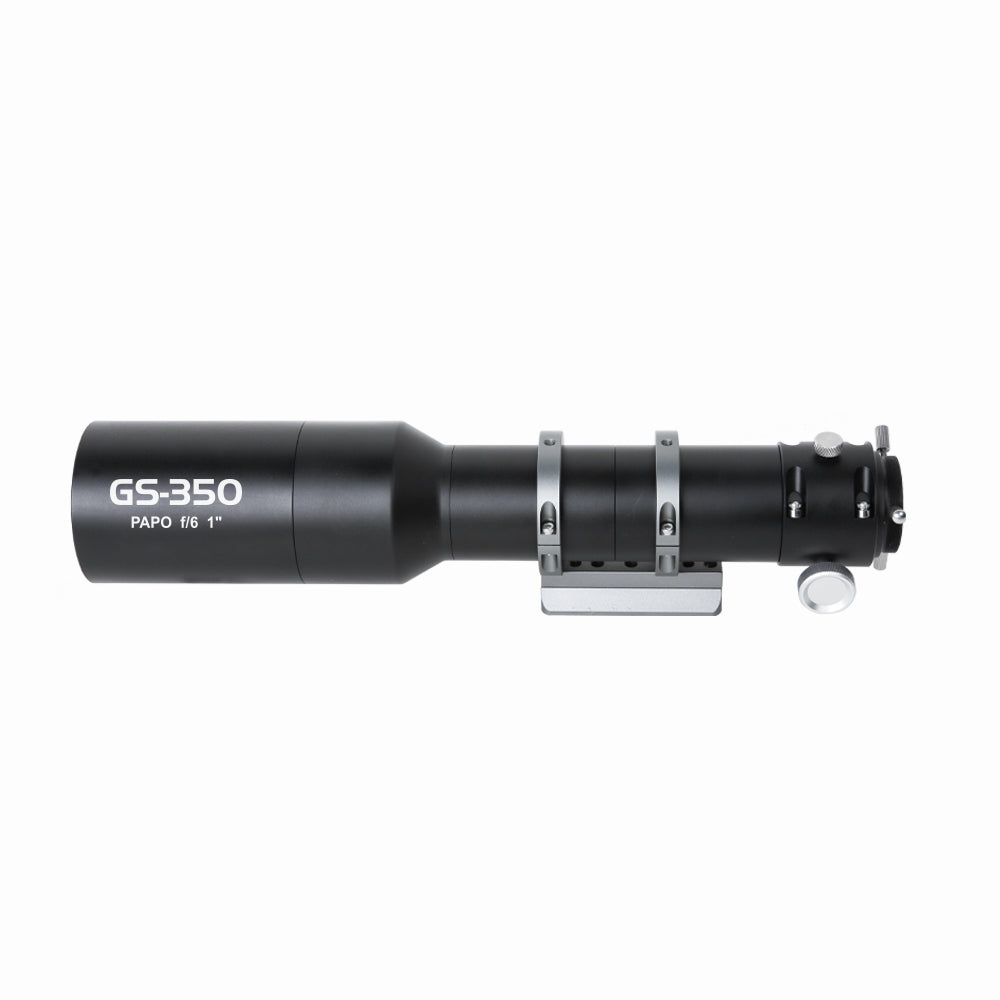
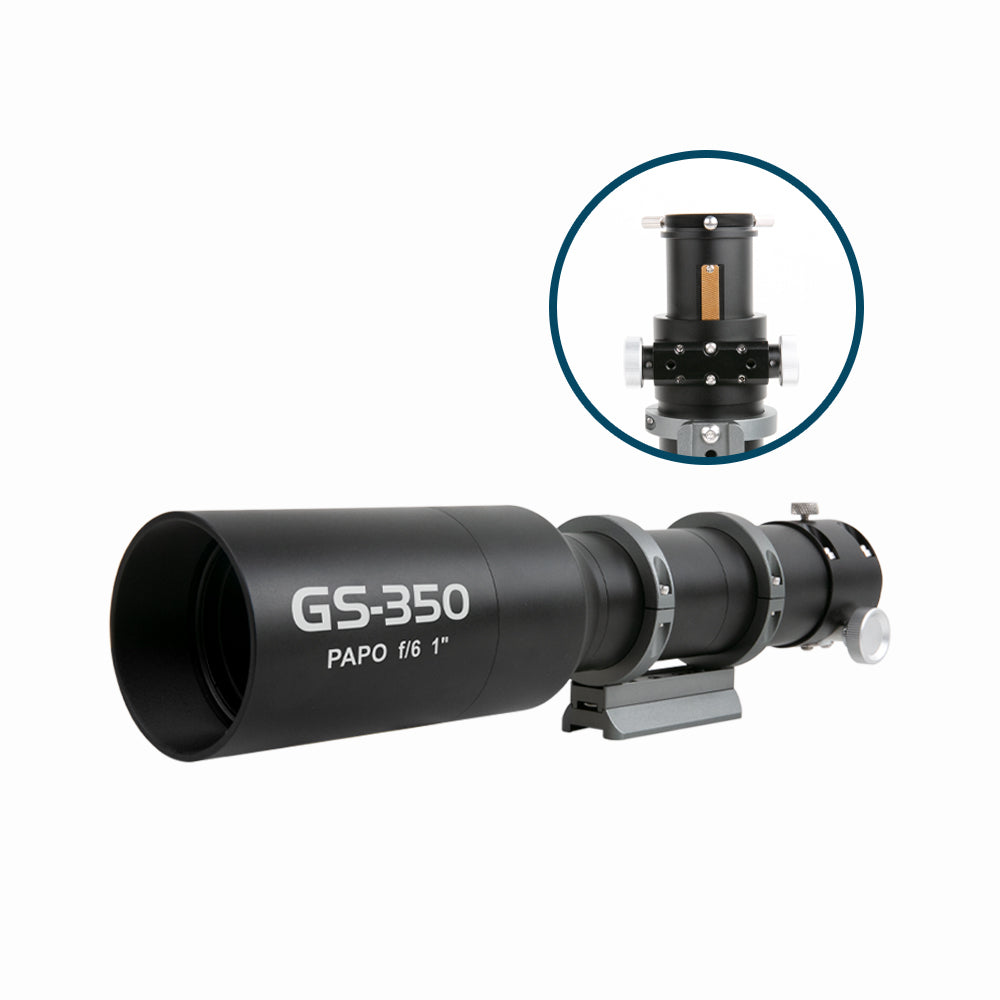
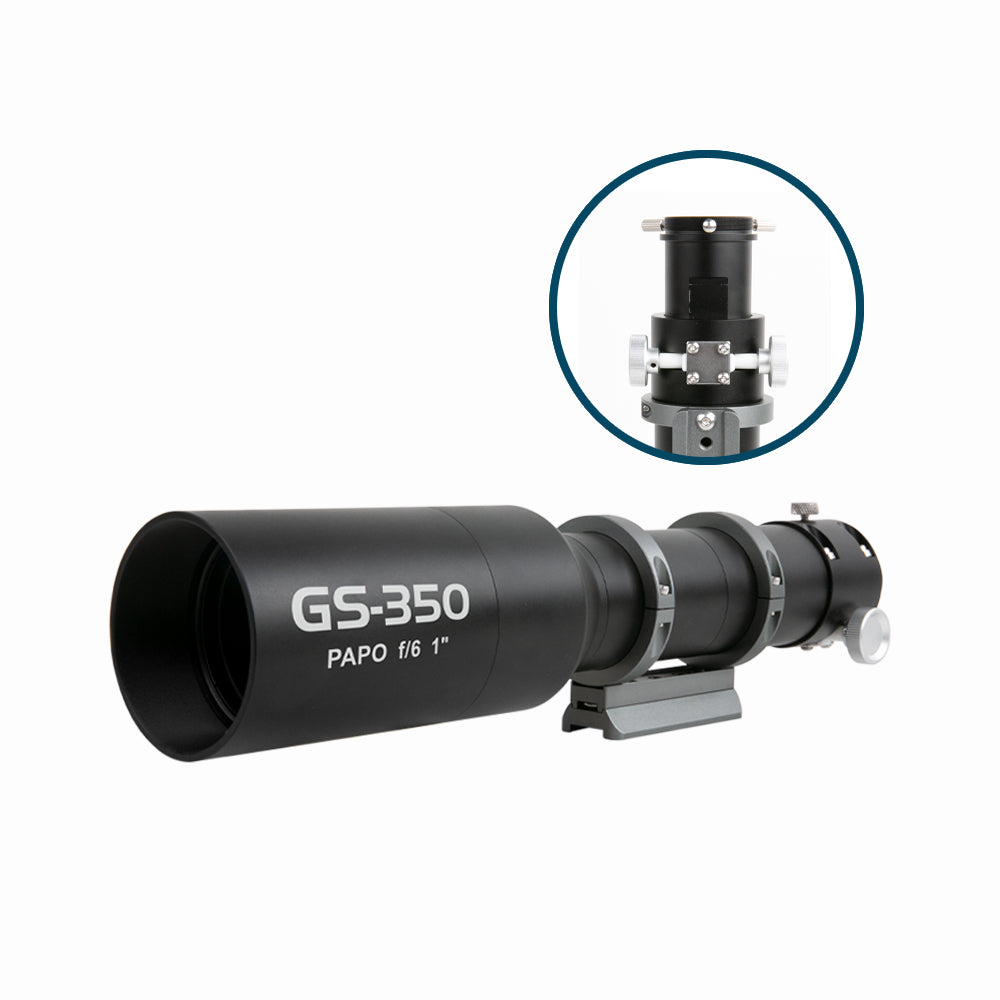
GS-350AR/AC
Focal length: 350mm | Aperture: 58mm | f/6

The GS Series guide scopes feature a proprietary three-element PAPO (planar apochromatic with integrated field flattener) optical configuration, incorporating a single ED element to achieve effective chromatic correction. The internal barrel is precision-machined with anti-reflection threads to suppress stray light, while all lenses are coated with multi-layer broadband AR coatings. This greatly enhances image contrast and resolution, ensuring pinpoint star images for accurate, efficient guiding, thus improving the stability of primary telescope imaging.
Designed around a 1-inch flat, well-corrected image circle, the GS Series supports sensors up to the IMX533 size. Versatile in function, it can be used for star-hopping, guiding, visual observing, and even DSO imaging—making it an ideal tool for astrophotography, casual stargazing, and entry-level night-sky photography.
How to Choose the Right Guide Scope
A practical starting point is to choose a guide scope with a focal length approximately one-third to one-half of your main telescope's focal length. For example, a 750mm main telescope can be paired with a guide scope around 250mm. The GS Series offers 150mm, 200mm, 250mm, 300mm, and 350mm focal-length options for different astrophotography setups.
After choosing the focal length, select the AC or AR version according to how you plan to use the guide scope. AC and AR versions use the same optical design and provide the same optical performance; the main difference is the focusing mechanism and intended setup.
| Model | Focal Length | Aperture | Focal Ratio | Camera Interface | Version |
|---|---|---|---|---|---|
| GS-150 AC/AR | 150mm | 30mm | f/5 | 1.25" / M42×0.75 | AC / AR |
| GS-200 AC/AR | 200mm | 40mm | f/5 | 1.25" / M42×0.75 | AC / AR |
| GS-250 AC/AR | 250mm | 50mm | f/5 | 1.25" / M42×0.75 | AC / AR |
| GS-300 AC/AR | 300mm | 50mm | f/6 | 1.25" / M42×0.75 | AC / AR |
| GS-350 AC/AR | 350mm | 58mm | f/6 | 1.25" / M42×0.75 | AC / AR |
AC or AR: Which Version Should You Choose?
Choose AC for Autoguiding
AC is designed for users whose primary purpose is autoguiding. Its rackless focusing structure allows fine adjustment with reduced movement, while the lightweight design helps keep a guiding setup stable during long imaging sessions.
Choose AR for Guiding + Imaging
AR is intended for users who want both guiding and imaging flexibility. Its geared focusing structure provides greater load capacity and is better suited to setups that may use imaging cameras or additional accessories.
Guide Scope Selection FAQ
How do I choose the right guide scope focal length?
Start with a guide scope focal length around 1/3–1/2 of your main telescope's focal length. For example, a 750mm main telescope can be paired with a guide scope around 250mm as a practical starting point.
Should I choose an AC or AR guide scope?
Choose AC if your main purpose is autoguiding and you want a lightweight, stable setup. Choose AR if you plan to use the guide scope for both guiding and imaging, or if you want more flexibility for additional equipment.
Do AC and AR models have different optical performance?
No. AC and AR versions use the same optical design and provide the same optical performance. Their main difference is the focusing mechanism and the type of setup they are designed to support.
Want to compare the complete range? View all GS Series guide scopes for astrophotography.

Key Advantages
1 PAPO Apochromatic Optical Design for True Star Color Reproduction
The GS Series guide scopes feature a proprietary 1-inch corrected image circle, three-element PAPO (Planar Apochromatic with integrated field flattener) optical design, incorporating an ED glass element to effectively correct chromatic aberration, astigmatism, and field curvature. This design delivers high resolution and crisp, pinpoint star images. The outstanding optical performance makes the GS Series equally suited for guiding, visual observing, and entry-level astrophotography.
Spot diagram of GS-250

Spot diagram of GS-350

2 High-Transmission Coatings & Anti-Reflection Threads
All optical surfaces are treated with broadband multi-layer AR coatings to reduce reflections and maximize light transmission. The internal barrel is precision-machined with anti-reflection threads, complemented by additional stray-light suppression measures, greatly enhancing image contrast and clarity.

3 CNC Precision Machining with Fine Matte Finish
The optical tube, mounting rings, and dovetail plate are crafted from aluminum alloy via CNC machining, balancing lightweight design with structural strength. Anodized surfaces provide wear and corrosion resistance suitable for field astronomy. The fine matte finish offers a comfortable, non-slip, and durable tactile experience.

4 Modular Structure for Maximum Flexibility
The main barrel integrates a proprietary universal M48 extension tube with built-in anti-reflection coating, enabling flexible configuration to meet different optical path requirements. This modular design supports both visual observation and astrophotography applications.

Note: Due to focal length constraints, the GS250 model may not reach focus when used with a diagonal mirror.
5 Dual Focusing Options for Flexibility
AC Version - Rackless Focuser
Smooth manual focus with Crayford-style precision; stable optical alignment; ideal for light-load astrophotography.
AR Version - Rack-and-Pinion Focuser
High-precision focusing with gear-and-rack drive; compatible with ToupTek Astro AAF electronic focuser; supports heavier loads and automated operation.

Wide Compatibility Provides Seamless Integration
✓ Supports guide and planetary cameras with sensor sizes up to 1".

✓ Focuser end with 1.25" inner diameter and external M42×0.75 thread for direct connection to mainstream cooled cameras (recommended sensor size ≤ 1").

✓ Multiple M5 threaded holes on the top and sides of the clamp for attaching additional astronomical accessories.

✓ Dovetail plate with multiple M6 threaded holes and one 3/8"-16 thread on the bottom for quick mounting to tripods or equatorial mounts.

✓ Universal M48 extension tube assembly with replaceable short tube for use with eyepieces or diagonals.

Fully Upgraded from the FS Series
Compared with the previous FS series, the GS series guide scopes bring major improvements in optical design and performance:

Dimensions
GS-250AC

GS-250AR

GS-350AC

GS-350AR

What's in the Box


Experience Professional-Grade Guiding
Elevate your astrophotography with the GS Series PAPO Guide Scope