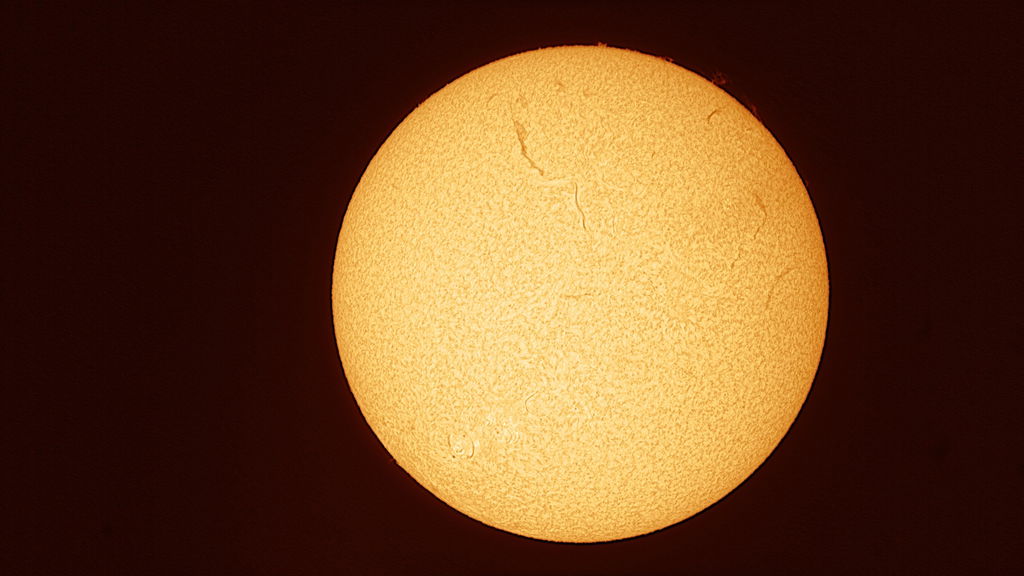

Saturn by TritonYung
Paired with an 850nm IR-Pass or 890nm Methane (CH4) filter, the G3M678M isolates deep atmospheric structures on Jupiter and Saturn, revealing subtle cloud dynamics invisible in standard light.


IMX678 High-Speed USB 3.0 Mono Planetary Camera
G3M678M - 標準版 / Fjord Green ...は取り寄せ中で入荷次第発送します。
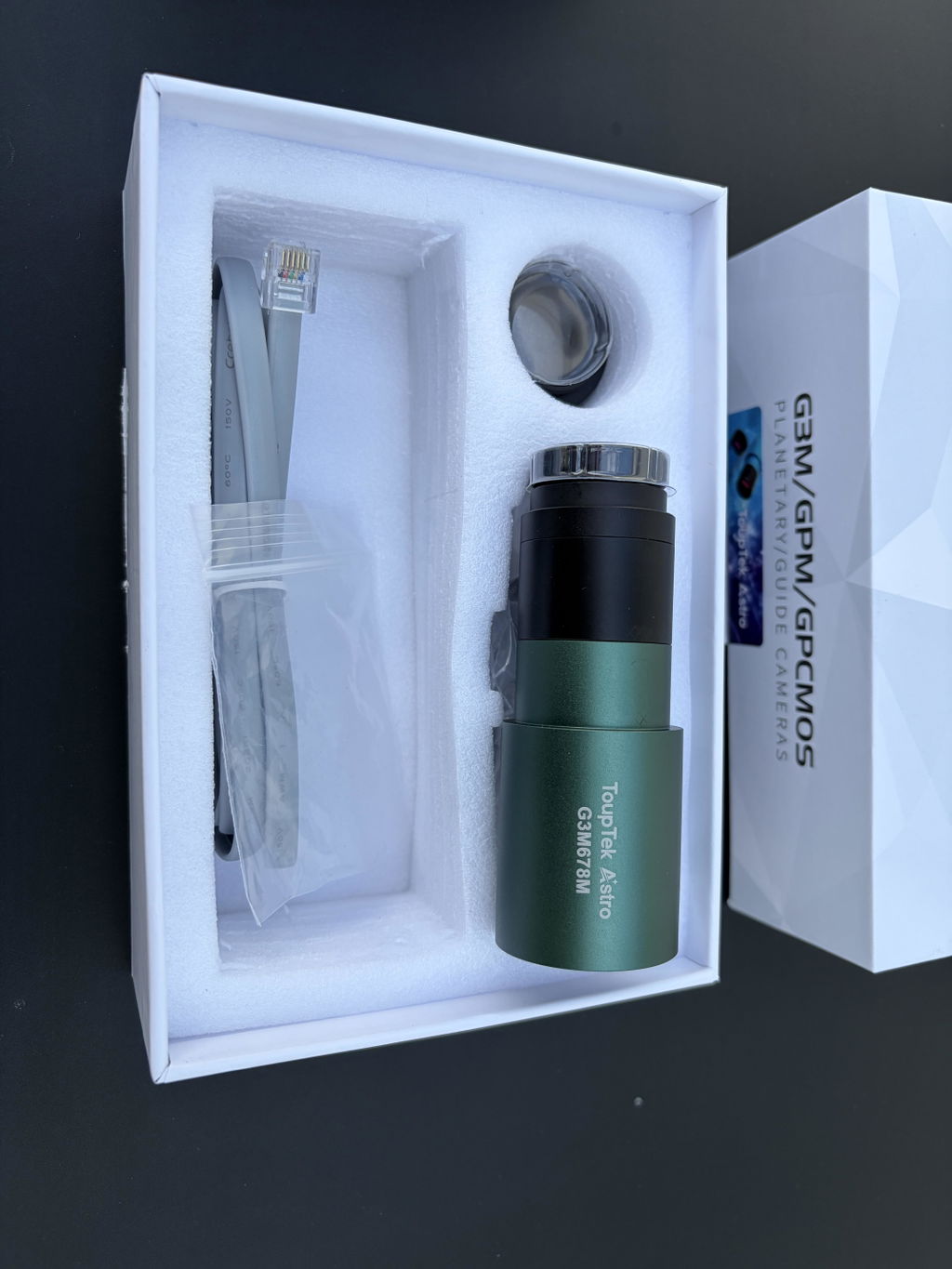
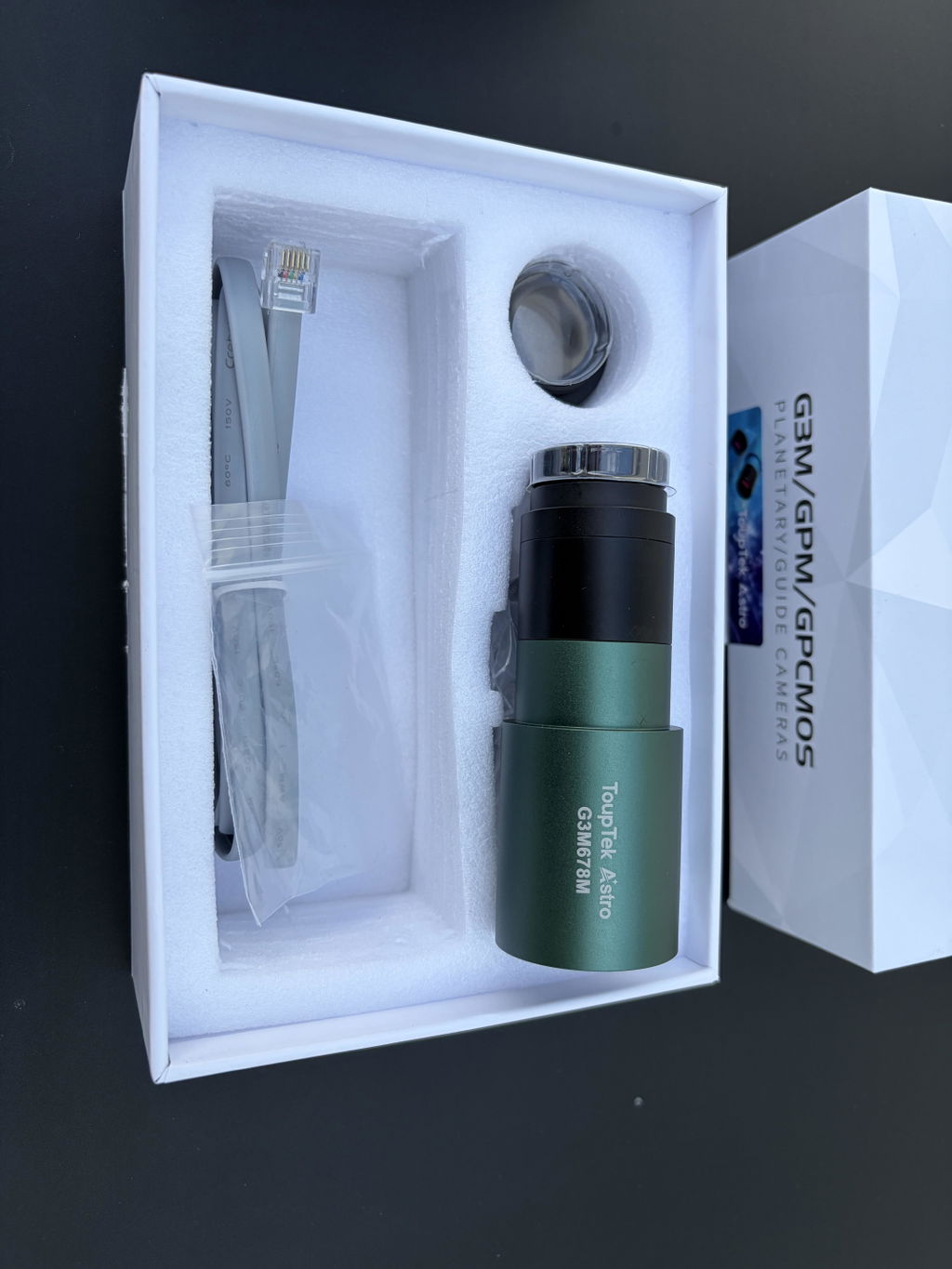
The Standard Version uses a C-mount for standard accessories and telescopes. The Extended Version uses a CS-mount with a shorter flange focal distance for broader OAG compatibility. Both versions accept 1.25-inch filters when connected through a 1.25-inch extender.
Shipping options and checkout-calculated delivery details are shown before payment.
For setup support, software downloads and warranty service, contact ToupTek Astro support with your order information.
Unmatched Sensitivity & High-Speed Performance
Powered by Sony’s advanced IMX678 monochrome sensor, the G3M678M features exceptional Quantum Efficiency (QE) and extended Near-Infrared (NIR) sensitivity. Unrestricted by a Bayer color filter array, this monochrome camera captures 100% of incoming photons across all visible and NIR wavelengths, dramatically boosting image contrast and detail.

NIR Imaging & Atmospheric Penetration
Saturn by TritonYung
Paired with an 850nm IR-Pass or 890nm Methane (CH4) filter, the G3M678M isolates deep atmospheric structures on Jupiter and Saturn, revealing subtle cloud dynamics invisible in standard light.

Equipped with a high-speed USB 3.0 interface, upgraded driver architecture, and full 12-bit ADC output, the G3M678M achieves extreme frame rates up to 1500+ FPS in custom ROI modes-delivering maximum dynamic range, smooth tonal transitions, and ultra-fast capture performance to freeze atmospheric turbulence and lock onto fine planetary, lunar, and solar details through lucky imaging.
*Note: At ultra-high frame rates (≥1500fps), dropped frame probability may vary depending on the user's video capture hardware. When using performance-limited capture devices, 740fps in 12-bit mode is recommended.
The Sony IMX678 monochrome sensor extends sensitivity into the near-infrared band and records without Bayer filter losses.
Which Do You Need For Planetary Imaging?
Coupled with an onboard 512MB DDR3 high-speed RAM buffer, the G3M series guarantees smooth, frame-drop-free data transfer while preventing sensor heating and buffer-induced artifacts during long recording sequences.

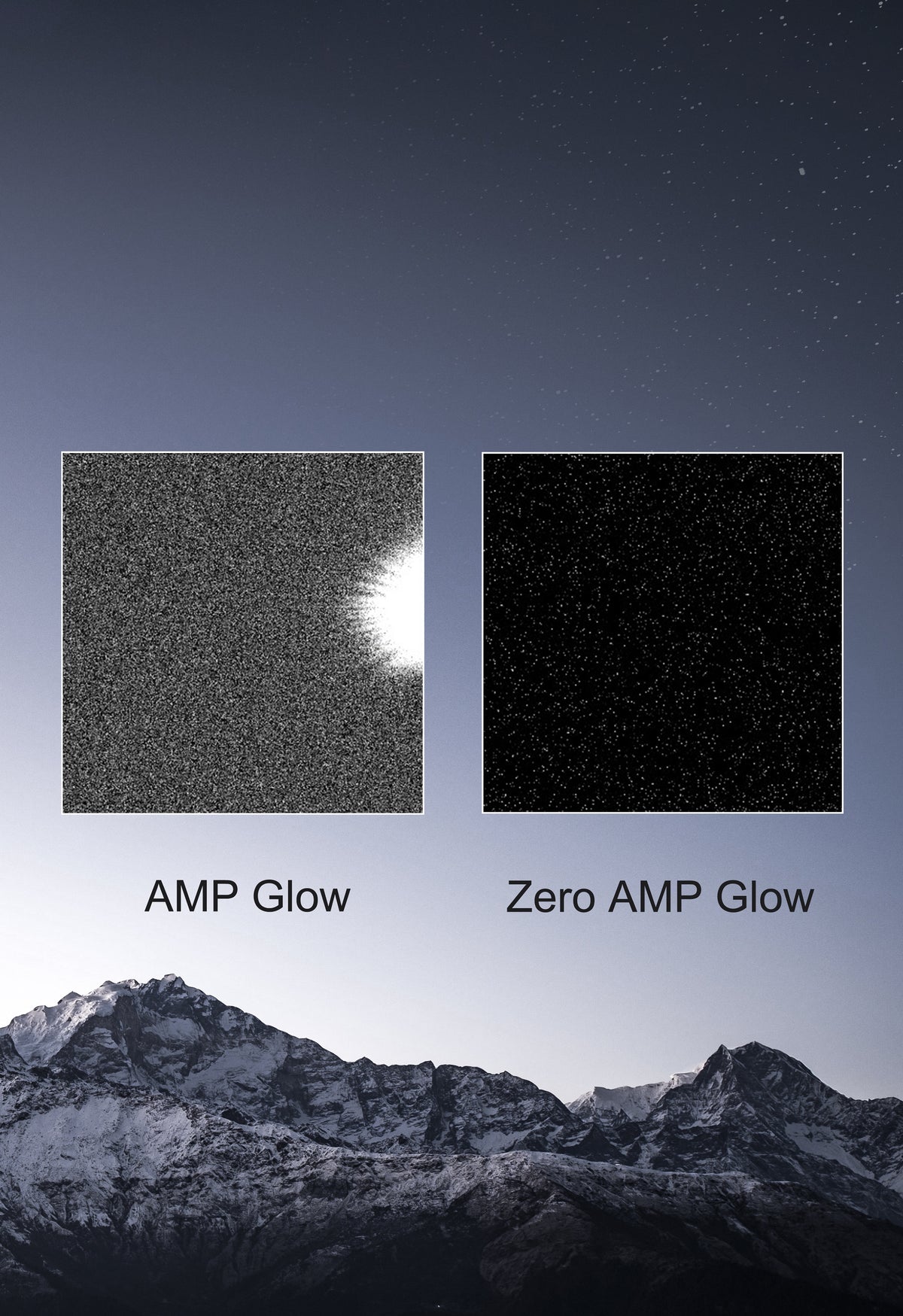
The G3M series features advanced circuit architecture that completely eliminates amp-glow at the hardware level. Whether shooting high-frame-rate planetary videos at high gain or longer exposures for autoguiding, your raw frames remain clean, pristine, and artifact-free.

Why buy two cameras when one can do it all? G3M series serves as high-end planetary cameras while doubling as ultra-sensitive auto-guiding cameras for deep-sky astrophotography setups.

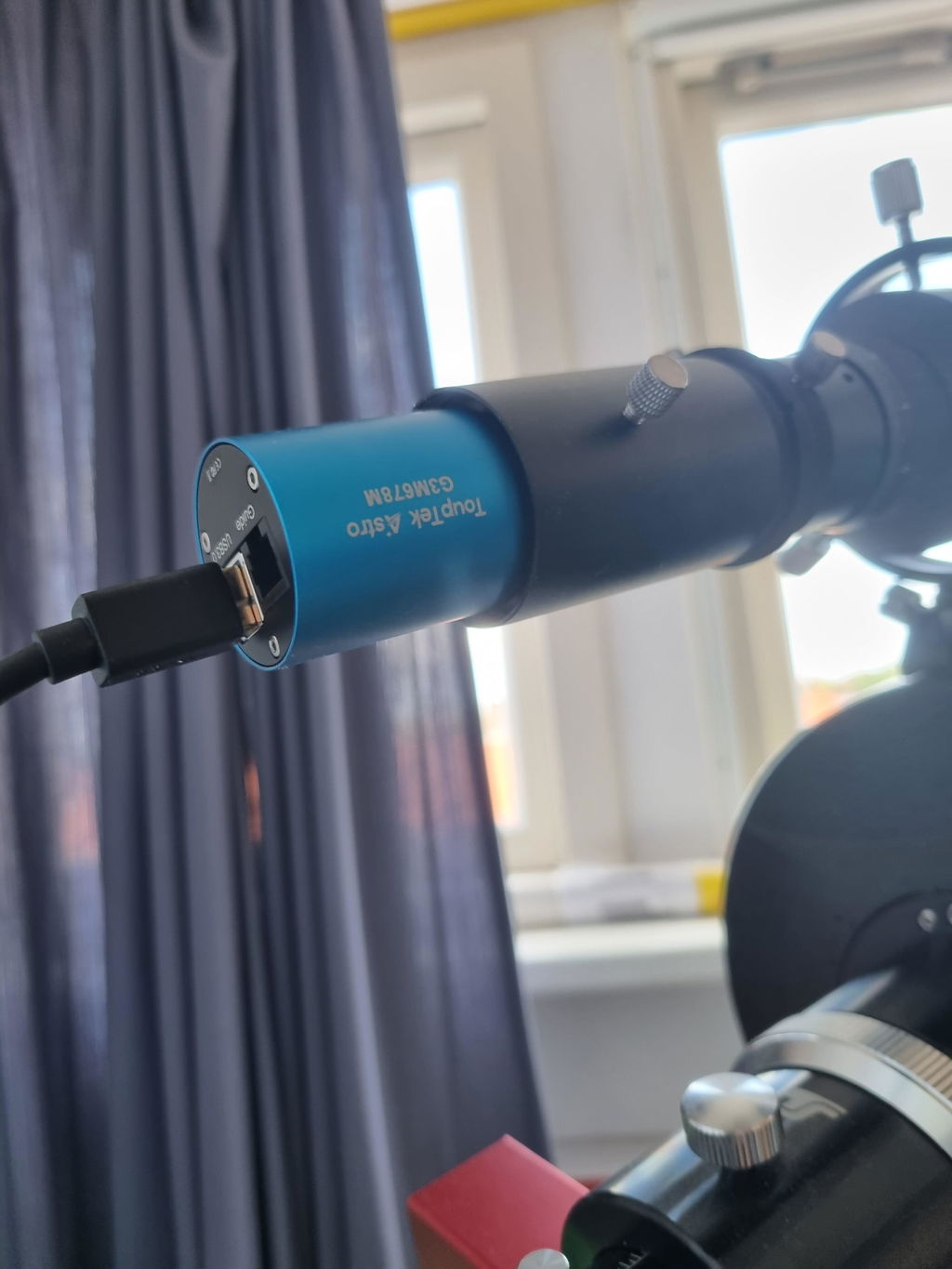
Featuring a standard 1.25" form factor, the G3M series planetary camera seamlessly fits into standard 1.25" focusers, guide scopes, and Off-Axis Guiders (OAGs) from ToupTek Astro and third-party brands, making it an effortless upgrade for any astrophotography imaging train.

The Standard Version uses a C-mount for standard accessories and telescopes. The Extended Version uses a CS-mount with a longer front barrel and shorter flange focal distance for broader OAG compatibility. Both versions accept 1.25-inch filters when connected through a 1.25-inch extender.

G3M is ToupTek Astro's planetary camera series, designed primarily for high-frame-rate planetary, lunar, and solar imaging. GPM is the guide camera series, designed primarily for autoguiding. Both series can also support selected near-infrared imaging workflows, so choose G3M when high frame rate is the priority and GPM when guiding is the primary task.
For infrared Milky Way imaging, prepare an IR-sensitive G3M or GPM camera, a compatible lens, an infrared-pass filter, a stable tripod or support, a laptop, smartphone, or compatible controller for image acquisition, and the required USB data cable. For a G3M camera, remove the front C-mount or CS-mount ring, then install the LP825 filter CS-adapter ring together with the lens.
The Standard Version uses a C-mount for standard accessories and telescopes. The Extended Version uses a CS-mount with a longer front barrel and shorter flange focal distance for broader OAG compatibility. Both versions accept 1.25-inch filters when connected through a 1.25-inch extender.
