


Quick Specs
AE676C
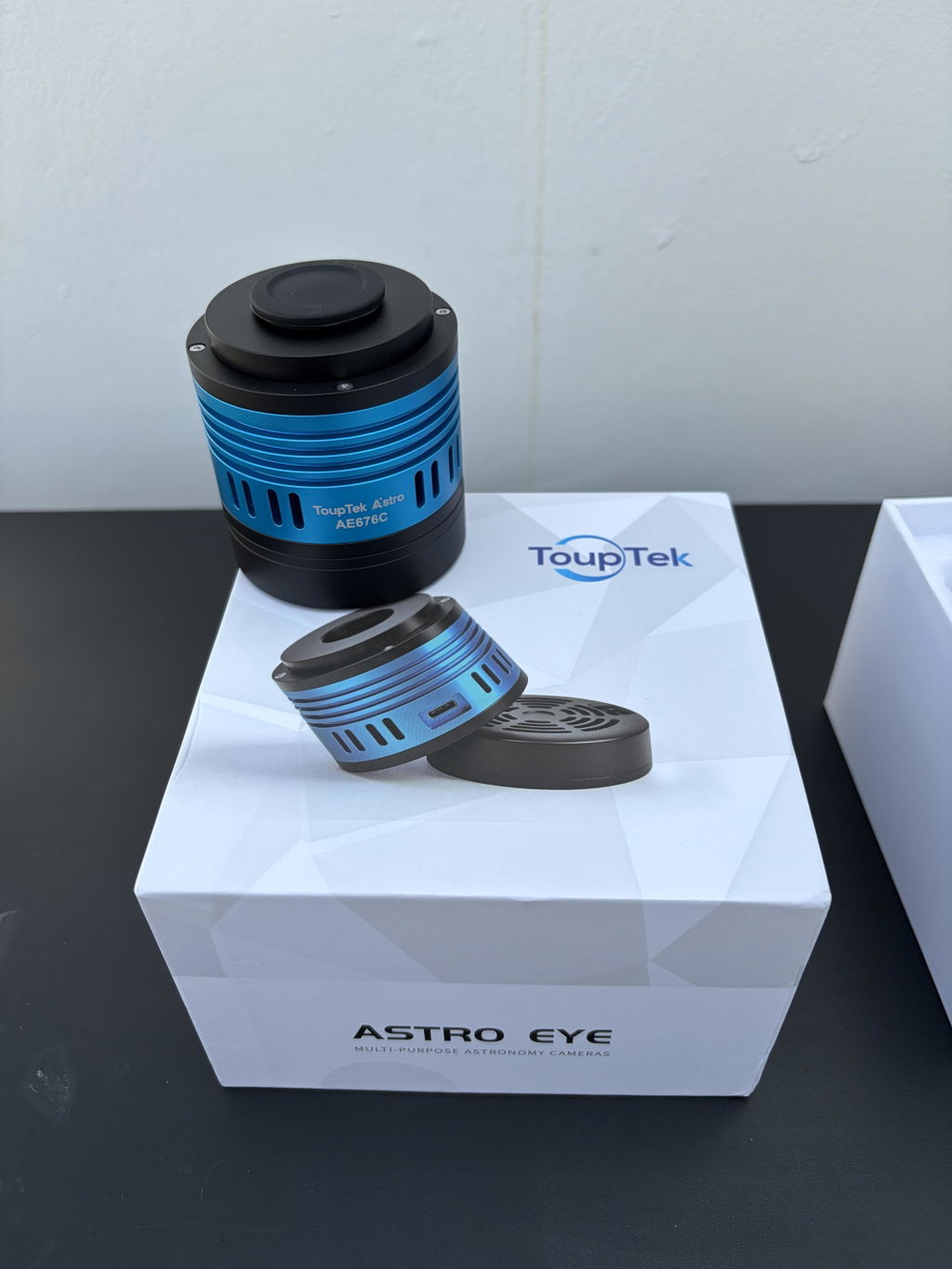
Caméra d'astronomie polyvalente AstroEye
AE676C - AE676C est en rupture de stock et sera expédié dès qu’il sera de retour en stock.
Compatibility / Requirements
Compatibility / Requirements
Works with CS mount, C mount, M42 and M42F interface paths for different optical systems and imaging accessories.
Delivery and Shipping
Delivery and Shipping
Shipping options and checkout-calculated delivery details are shown before payment.
Warranty and Support
Warranty and Support
For setup support, software downloads and warranty service, contact ToupTek Astro support with your order information.
Reviews (18)
Reviews (18)
I bought this AE676C Camera from a German dealer (TS) and my primary interest is deep-sky imaging.
The download of the driver was peanuts, installation in NINA as well and the camera was recognized correctly. The cooling with the additional add-on system works fine and obtains about 15 degrees difference to ambient temperature during operation of the camera.
The nights where I live were quite warm - around 20-25C at the beginning of the test period, later then it was cooling down to about 18C. I achieved sensor temperatures around 10C at the beginning and later down to about 3C - which was fine.
Thermal noise was existing but no problem after stacking images and cleaning them with a low impact setting of BlurXterminator.
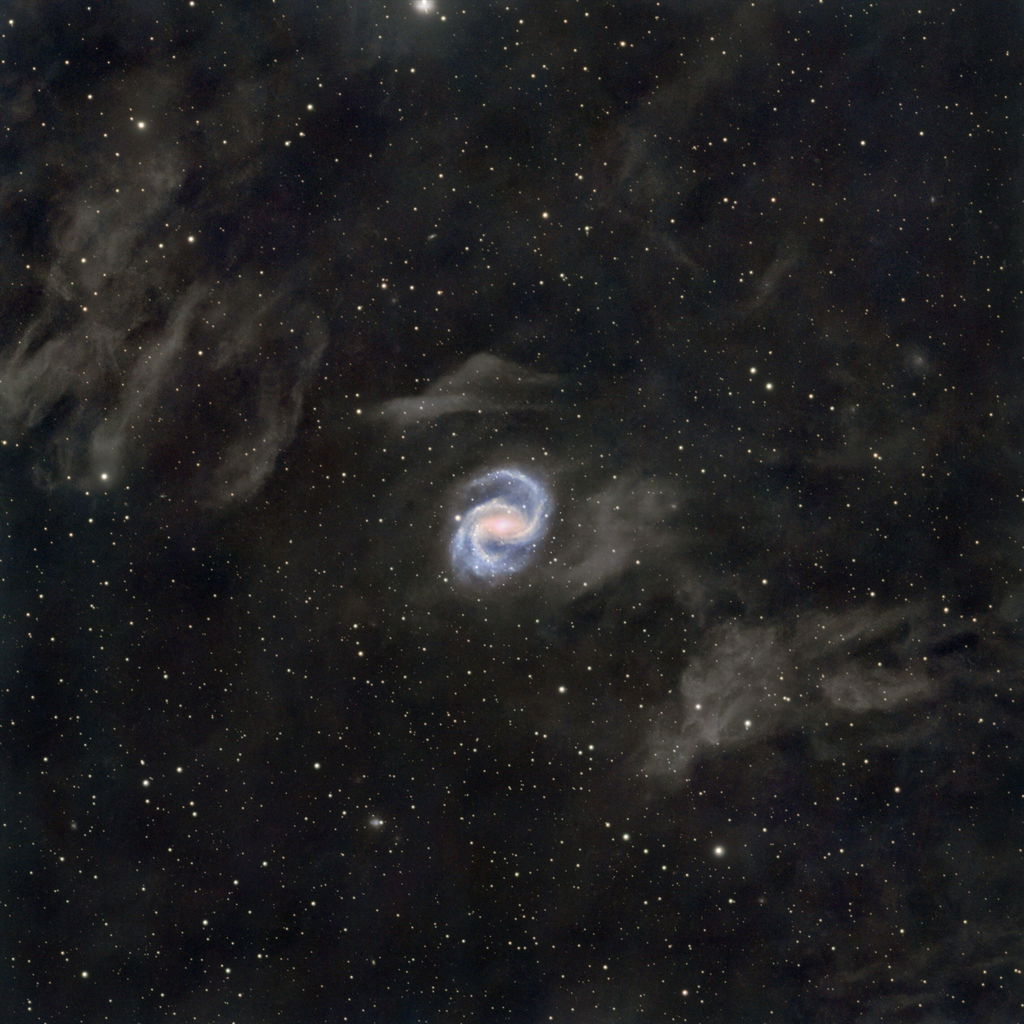
My target was a bit difficult, NGC6951, a galaxy residing in an IFN network. I collected in total about 800x120" and used 683x120" subs for integration in the newly released program Stacking Wizard (with darks, biases and flats). The result was very good, I transferred it to PixInsight and Photoshop for finalization.
I am very pleased with the result of the inexpensive camera!
A more detailed image can be found on Astrobin here: https://app.astrobin.com/u/gnnyman?i=3ls1az
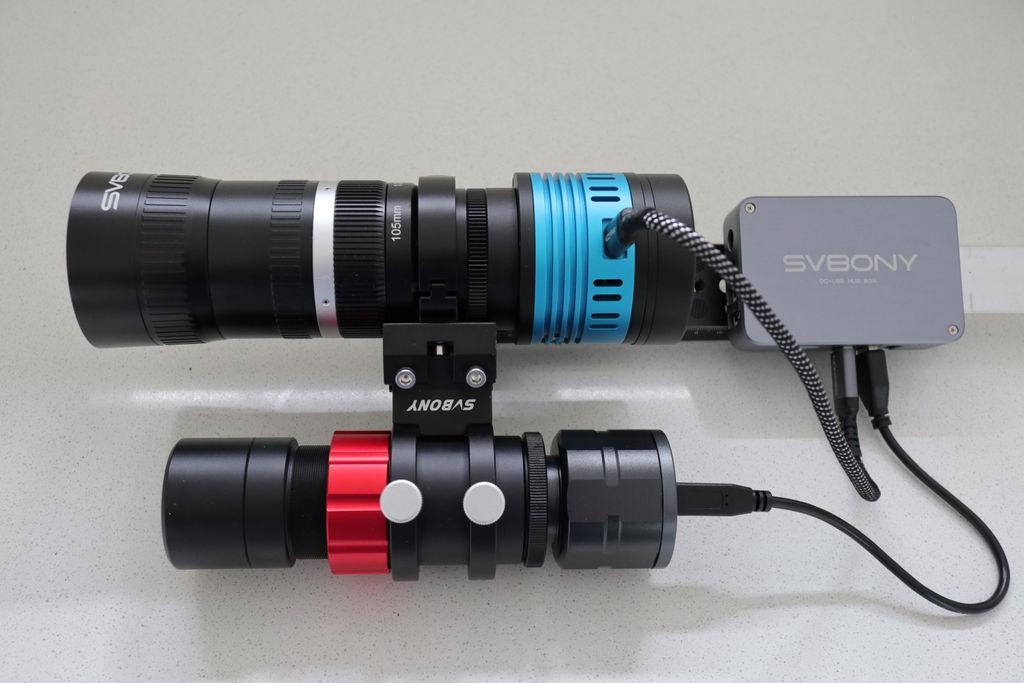
I have only been able to test it since my mount is still in the UK with DarkFrame, but so far so good. It is a really cute little kit with the AE676C mounted on the SV535. The camera works perfectly with ASCOM drivers in both APT and NINA. I think the TEC works better in APT - IMHO. A more versatile choice than the one from the red company that uses the same sensor.
ToupTek AE676C is my first dedicated cooled astronomy camera, paired with the Askar FRA300 and Askar N160, it allows me to get some nice deep-sky images
Pros:
- Lightweight and compact body
- Low USB power requirements, which makes it possible to use a compact power source in the field. In my case, the entire imaging setup consumes no more than 18 watts with the camera's cooling running at maximum power.
- Low noise level, even with the sensor cooled to +9°C.
- Good image detail despite the relatively small sensor size.
Cons:
- The fan mounting doesn't seem very well designed, in my opinion. In my case, it has already fallen off around 15 times, as even a slight bump is enough to dislodge it. The only good thing is that it has survived all of this so far and is still working without any issues.
- A large number of hot pixels. The camera is quite demanding when it comes to dark-frame calibration and regular dithering between exposures.
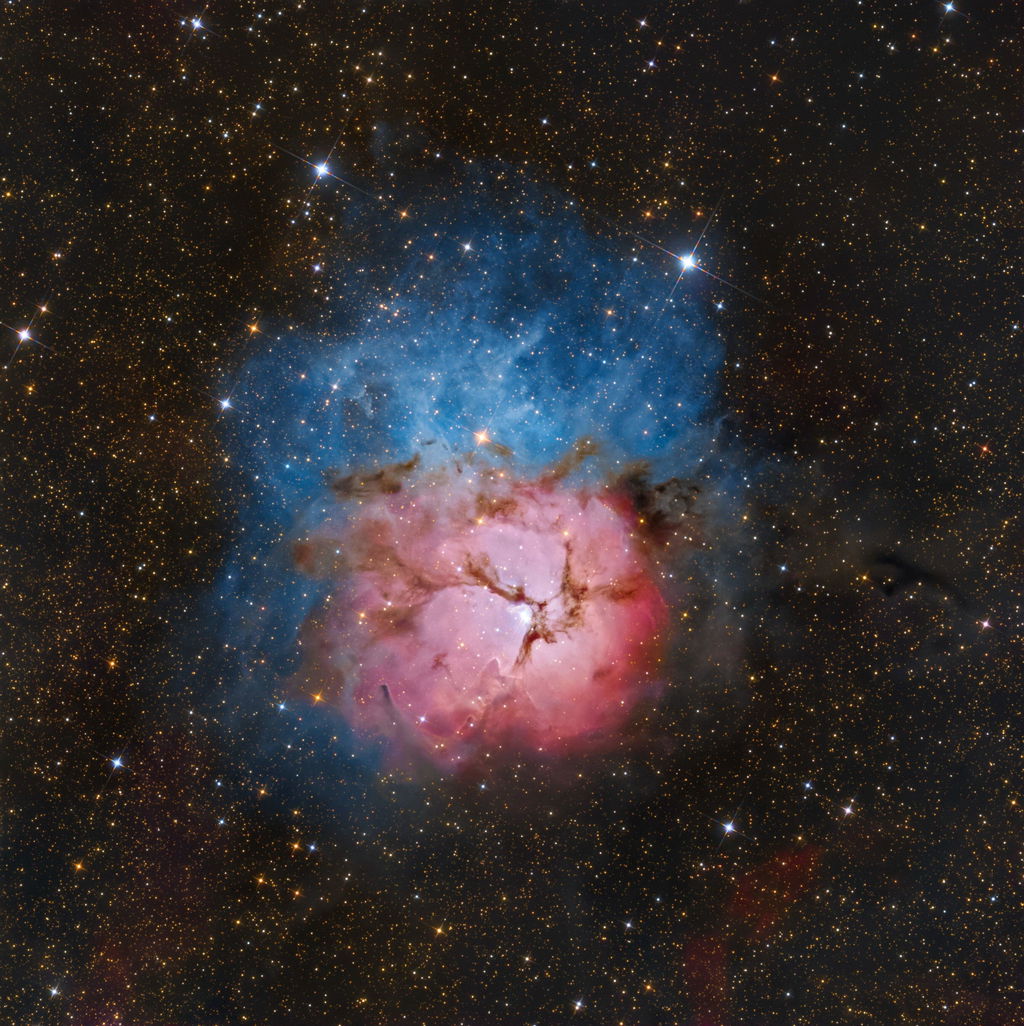
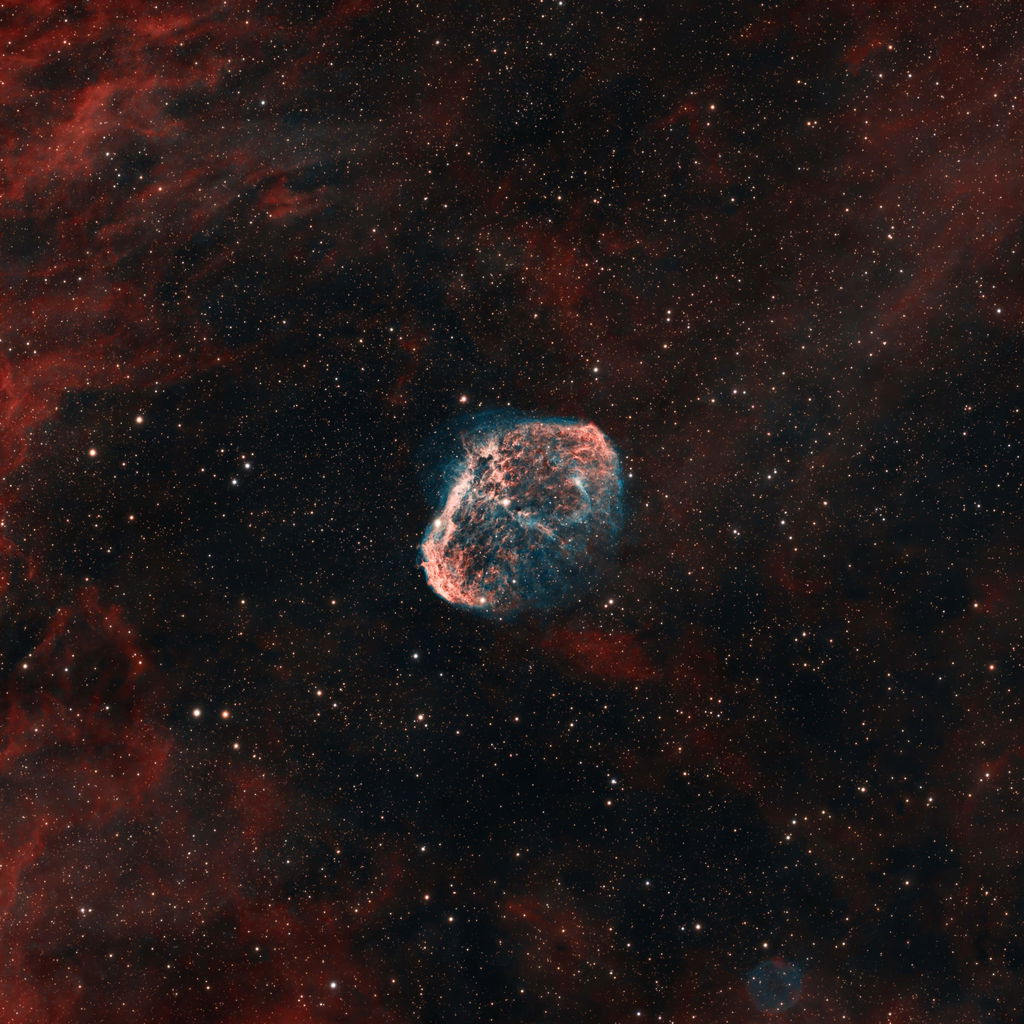
This is a highly interesting and excellent versatile camera. I’ve been trying it out on various targets, and thanks to ToupTek's fantastic shipping service, I received the product safely and in perfect condition. Thank you, ToupTek, for helping me explore so many different targets and achieve such great results!
good camera system, specially for small objects like planetary nebula or globular clusters, or even for planets, moon, sun. i used it on a c8, better is a newton with smaller focal lenght, i would say.

I test my new Camera AE676E, I can’t believe the image that I got in Bortle 8, Temperature outside was 25c , camera cool down to 10c fast, I point M8 and took pictures for for 85 minutes,90 seconds exposure using sv240 filter and I had this amazing picture, I don’t have experience editing am trying to edit pure basic with Siril.
I Always was looking for cooling camera with small sensor because some times we need small sensors to photograph small targets like galaxies o smaller nebulas without needing to be cropped it and don’t loose quality.
I wish in the future with they come out with another fan cooling camera with smaller sensors like IMX715.
They said that the camera could cool down 20c from outside temperature, I will try to go down to the maximum maybe 5c to see what can I get.
Thanks ToupTek.

I bought the AE676C as a second camera to collect RGB data alongside my ATR585M. It has a very compact design, and the cooling drops the temperature by 18°C below ambient when the fan is enabled! The first tests are very promising. Unfortunately, I haven’t had a completely clear night to perform a full test yet, but so far, everything is just perfect. I’ll test it on colder nights to see if any dew issues pop up when pushing the temperature below 0°C!
Super matériel
The camera comes with an M42F-M42F adapter. This can be used in combination with an M42M-M48 adapter to insert the camera into a widespread 2 inch Press Ring.
Strangley the provided M42F-M42F adapter measures 52mm.
I have used a turning lathe machine to reduce the outer diameter of the M42F-M43F adapter to 50.8mm. Now I can stick the camera into the 2 inch press ring of my telescope without any further adapter.
Why does Touptek provide this adapter with a non 2 inch outer diameter?
Top quality, sharp images, fair price. A very good astro camera with detachable cooling fan
Nice small camera doing a Grat Job.
Very satisfied and clearly recommend this camera.
Great camera.
This is the camera I was waiting for! Cooled and affordable.
The performance of the Sony Starvis 2 IMX 676 is stunning.
The design (with the fan (which mounts and holds perfectly)) is superb! The "low power" cooling is more than enough! (There is no need for a -30°C cooling for such a low dark current sensor, if you do the read noise vs. darknoise math.)
State of the art electronics design (no horizontal banding). Absolute vibration free fan.
Well done, Touptek!
Astro camera interessante per rapporto qualità prezzo applicabile in tutti i campi(DSO e Planetario), il formato quadrato la rende perfetta per i mosaici.
Touptek claims that this camera is to be used for astronomy.
Telescopes have M28.6, M48 and M42 threads.
This camera provides
- IR pass filter cap that only fits the supplied camera lens (incompatible to 1.25 tubes or filters)
- IR cut filter with 1.25 inch outer diameter and C-mount thread (incompatible to 1.25 filters)
- M42 adapter wih 52mm outer diameter (incompatible to 2 inch adapters)
- M42 to C-mount adapter (requires supplied 1.25 extension tube to adapt to M28.6)
So you cannot
- combine any of the provided filters with your own 1.25 or 2 inch filters
- use an 1.25 inch filter/ reducer in a 2 inch eyepiece holder
- use a 1.25 inch filter/ reducer closer than 27mm to sensor
Why does Touptek use so many different measures and threads on this camera?
Why not to use 1.25" M28.6 or M48 as standard thread on camera and provide adapters to C-mount, CS-mount and M42/M48?
the camera itself is okay, I have used it for lucky imaging, the fan on the other hand is a good idea that's a little fragile, if you bump or justle the rig with the fan on the camera, you're going to be looking for it in the dark. other than that, I can say it's okay.
Fan started making noise after 1 week and finally quit working. I am using this with a Stella Vita. It is new and software is up to date. Trying to get camera set so it will stack without dropping a a but of frames.
What a great choice! The AE676C is a real gem, and I’m delighted with it. It’s one of those purchases that justifies itself from the very first shot.
Payment & Security
Payment & Security
We ensure secure processing of your payment information and do not retain or have any access to your credit card details.
Full Specifications
Full Specifications

AE676C

AE676C - AE676C est en rupture de stock et sera expédié dès qu’il sera de retour en stock.
Caméra d'astronomie polyvalente AE676C
Une caméra d'astronomie polyvalente et légère pour l'imagerie des planètes, de la Lune, du Soleil, du ciel profond, des météores, de la Voie lactée et la surveillance du ciel complet.

Spécifications techniques

Avantages clés
CMOS couleur Sony IMX676
Capteur carré 1/1,6" avec une résolution de 12,5 MP pour un cadrage flexible et des applications d'astrophotographie polyvalentes.
Haute sensibilité infrarouge
Les performances en infrarouge proche de type quasi-monochrome permettent une meilleure imagerie de la Voie lactée, des météores et en basse lumière.
Module de refroidissement magnétique
Passez librement du mode compact sans vibration au mode de refroidissement amélioré grâce au système magnétique détachable.
Large compatibilité
Compatible avec les télescopes, lunettes guides, objectifs, trépieds et de nombreuses plateformes logicielles d'astronomie.
Que pouvez-vous capturer avec l'AE676C ?
De l'imagerie planétaire et lunaire aux objets du ciel profond, météores, Voie lactée et surveillance du ciel complet, l'AE676C est une caméra d'astronomie polyvalente et facile à utiliser, conçue pour explorer diverses possibilités en astrophotographie.
Imagerie du ciel profond

Imagerie solaire, lunaire et planétaire

Imagerie de la Voie lactée et grand champ

Surveillance du ciel et imagerie des météores

Capteur carré pour un cadrage flexible
L'AE676C est équipée d'un capteur carré 1/1,6", réduisant les contraintes liées aux différents ratios d'aspect et offrant une plus grande flexibilité pour la surveillance du ciel complet, la détection des météores, la photographie de la Voie lactée et l'imagerie grand angle.
Assemblage de mosaïques facilité
Le format carré aide à réduire le recadrage et améliore le flux de travail d'assemblage.
Post-traitement plus rapide
Un cadre plus équilibré facilite l'alignement et la composition.
Adapté au grand angle
S'associe parfaitement aux objectifs fisheye et grand angle pour une couverture du ciel plus large.

Sensibilité infrarouge supérieure pour l'imagerie basse lumière
Reposant sur la technologie Sony Starvis 2, l'AE676C offre une forte sensibilité à la fois en lumière visible et infrarouge. Avec une QE élevée à 825nm et au-delà, elle permet d'excellentes performances en basse lumière et une réponse IR quasi plein pixel comparable aux capteurs monochromes.

Fenêtre protectrice traitée antireflet
L'AE676C dispose d'une fenêtre optique traitée antireflet double face pour réduire les reflets et la perte de lumière, protéger contre la poussière et les dommages physiques, et améliorer la transmission sur les longueurs d'onde de 400 à 1100 nm.
Système de refroidissement magnétique modulaire
L'AE676C dispose d'un module de ventilateur de refroidissement arrière magnétique amovible pour une installation et un retrait rapides. Le corps de la caméra intègre un refroidissement TEC à un étage, une structure de dissipation thermique multi-canaux de précision et un refroidissement à air actif pour réduire le bruit thermique lors des longues expositions.

Mode température constante sans vibration
Avec le module TEC intégré et l'algorithme de contrôle PID, l'AE676C permet un refroidissement précis jusqu'à 5°C en dessous de la température ambiante, avec une stabilité de ±0,1°C pour une imagerie nette à longue focale.
Mode de refroidissement amélioré
Avec le ventilateur magnétique attaché, l'AE676C peut réduire la température du capteur jusqu'à 20°C en dessous de la température ambiante, minimisant le bruit thermique lors des poses longues.
*Testé dans des conditions de pose longue à 25°C de température ambiante avec une ventilation adéquate. Les performances réelles peuvent varier selon les conditions environnementales et la durée d'exposition.
ADC 12 bits natif et ROI matériel
Capturez des images 12 bits nativement, avec un binning logiciel de 1×1 à 8×8 et un binning matériel de 1×1 à 2×2. Le ROI matériel permet des fréquences d'images plus élevées en réduisant la zone de lecture, atteignant jusqu'à 993 FPS à résolution réduite en mode 8 bits.

Performance stable avec cache DDR3 512 Mo
Équipée d'une mémoire tampon DDR3 de 512 Mo, l'AE676C assure un transfert de données stable et aide à prévenir les pertes d'images, même en cas de limitations de bande passante. Le bruit de lecture est aussi bas que 1,01e⁻ pour des arrière-plans propres, tandis que la plage dynamique de 69,7 dB préserve les détails dans les zones claires et sombres.
Modes de gain pour différents scénarios
Mode HCG
Réduit le bruit de lecture tout en maintenant une plage dynamique élevée pour les objets du ciel profond faibles et le guidage.
Mode LCG
Empêche la surexposition des cibles brillantes tout en préservant les détails des hautes lumières.
Mode HDR
Combine le faible bruit du HCG et la grande capacité de puits du LCG pour une qualité d'image supérieure.


Compatibilité logicielle
Connectez-vous via l'application StellaVita, le logiciel ToupSky, ou utilisez ASCOM, INDI et le SDK DirectShow. Les logiciels tiers compatibles avec ces SDK peuvent également s'intégrer via les pilotes disponibles sur le site officiel de ToupTek Astro.
Connectivité flexible avec back focus

Structure et connectivité

Options de montage flexibles
Prend en charge les interfaces CS, C, M42M et M42F pour différents systèmes optiques et accessoires d'imagerie.
Connectivité haute vitesse
Le port USB-C prend en charge le transfert de données haute vitesse et l'alimentation pour des sessions d'imagerie stables.
Inclut un tube d'extension de 1,25" pour l'insertion de filtres ou d'oculaires.
Contenu de la boîte

Lancez-vous dans l'astrophotographie avec l'AE676C
Une caméra d'astronomie compacte pour les planètes, la Lune, le Soleil, le ciel profond, les météores, la Voie lactée et la surveillance du ciel complet — un moyen simple d'explorer davantage de possibilités en astrophotographie.
What's in the box
The standard kit includes the camera, cooling fan module, adapters, fisheye lens, IR filter cap and USB cable.
Frequently Asked Questions
Is the AE676C a good first astronomy camera for beginners?
Yes. The AE676C is designed as a true multi-purpose astronomy camera, allowing beginners to explore deep-sky imaging, planetary photography, guiding, meteor detection, and Milky Way photography with a single device. This means you can learn different areas of astrophotography without purchasing multiple cameras and build a light-weight and portable setup.
What makes the AE676C different from a IMX585 cooled astronomy camera?
While the ATR585M/C is primarily optimized for dedicated deep-sky imaging, the AE676C is designed as a true multi-purpose astronomy camera. Its high-resolution square sensor, exceptional infrared sensitivity up to 1100nm, lightweight design, and modular cooling system make it ideal not only for deep-sky photography, but also for Milky Way imaging, meteor detection, planetary imaging, guiding, and all-sky monitoring. For users seeking maximum versatility from a single camera, the AE676C offers significantly broader application possibilities.
What's the weight of AE676C?
The AE676C camera body is 229g and the magnetic fan is 69g. The whole package is 676g.
